
- Home
- IPL hair removal guide
The complete IPL hair removal guide
Everything about IPL hair removal: from the science behind the light flashes to practical tips for home. What it is, how it works, who it's suitable for and what you can realistically expect.
Contents of the guide
- 01 Clinical effectiveness of IPL Scientific evidence for IPL results and long-lasting effect.
- 02 Dermatological background How skin and hair respond to IPL with different skin tones.
- 03 How IPL technology works Light pulses, heat transfer, ice cooling and sensor technology.
- 04 Safety & regulations Sensors, light filters and CE, RoHS and FDA standards explained.
Clinical effectiveness of IPL

The effectiveness of Intense Pulsed Light (IPL) has been extensively researched within dermatological science. Numerous clinical studies show that IPL, when applied correctly, can deliver a long-lasting and significant reduction in hair growth.
A 2021 systematic review of home-use devices in dermatology confirmed this: home IPL proved effective and safe, with all randomised trials reporting a reduction in hair density of more than 50% and only mild, temporary side effects occurring (Cohen et al., 2021).
Individual clinical studies also support these findings. A study of 70 women at Maastricht Medical Centre showed an average hair reduction of 87% after around eight treatments, with results lasting more than 27 months (Schroeter et al., 2004).
The effectiveness of the Nova One IPL fits seamlessly with this. In a clinical test by Shenzhen Mlay Intelligent Technology Co., Ltd. (T16 model, 2023), 80% hair reduction was achieved in 20 test subjects within seven weeks, without serious side effects such as swelling or ulceration. The device was clinically validated as safe and effective for home use.
These results are explained by IPL's mechanism of action: the light penetrates to the hair follicle, where the energy is absorbed by melanin and converted into heat. This heat weakens the hair root, slowing new hair growth. Because the surrounding tissue is largely spared, the skin barrier stays intact and irritation is kept to a minimum.
Dermatological background
The way IPL works starts with the interaction between light and pigment. Every hair follicle contains melanin, the pigment that determines the colour of your hair. During an IPL treatment this pigment absorbs the emitted light, which is then converted into heat. That heat reaches the hair root and gradually weakens it, slowing hair growth without damaging the skin itself.
This process is called selective photothermolysis: the light specifically targets the dark pigment in the hair, while the surrounding skin is left untouched. That's why IPL works most effectively on skin types I–IV with dark hair. Modern IPL devices, such as Laesera's, are also equipped with automatic skin tone detection. The light intensity is adjusted to your skin every time, making the treatment not only effective but also safe, even for sensitive skin types.
Because IPL uses a broad spectrum of light pulses, several hairs can be treated at once. That makes the system particularly suitable for larger areas such as legs, arms or back.
In short: IPL targets the hair follicle, not the skin. This keeps the skin barrier intact and makes hair removal not only effective but also dermatologically responsible.
Comparative research also shows that IPL has a favourable safety profile compared with other light and laser therapies. A clinical study of 66 women with hirsutism showed that both diode laser and IPL are effective for hair reduction, but that IPL caused fewer side effects and showed better outcomes on fine hairs (Karadaghy et al., 2020).
The Fitzpatrick skin type scale
The Fitzpatrick scale classifies skin types by their reaction to UV light. Determine your skin type below to see whether IPL hair removal is suitable for you.
- Type I Always burns, hardly tans Very suitable
- Type II Burns easily, tans lightly to hardly Very suitable
- Type III Burns moderately to rarely, tans slowly Suitable
- Type IV Rarely burns, tans easily Suitable
- Type V Rarely burns, dark pigment Limited suitability
- Type VI Never burns, very dark pigment Not suitable
Kortom: IPL works best with high contrast between skin tone and hair colour. Dark hair on light skin gives the best results.
How IPL technology works

IPL (Intense Pulsed Light) works with short, powerful light pulses directed at the skin. The light is absorbed by the pigment (melanin) in the hairs and converted into heat. This heat reaches the hair root and disrupts the growth process there, so hair growth gradually reduces or stops.
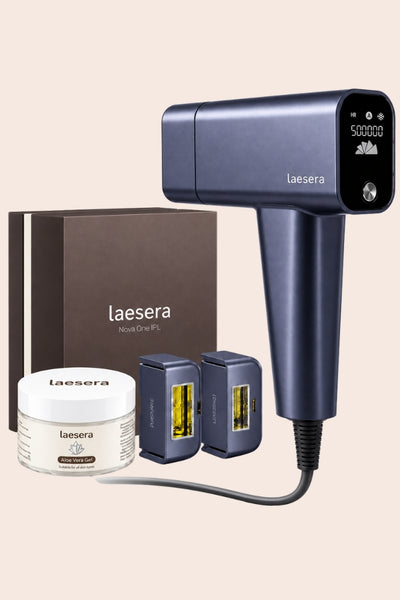
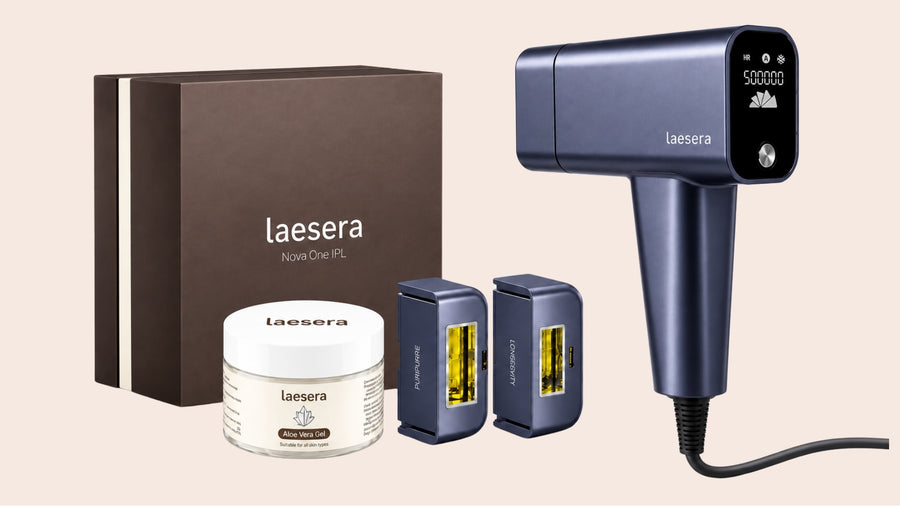
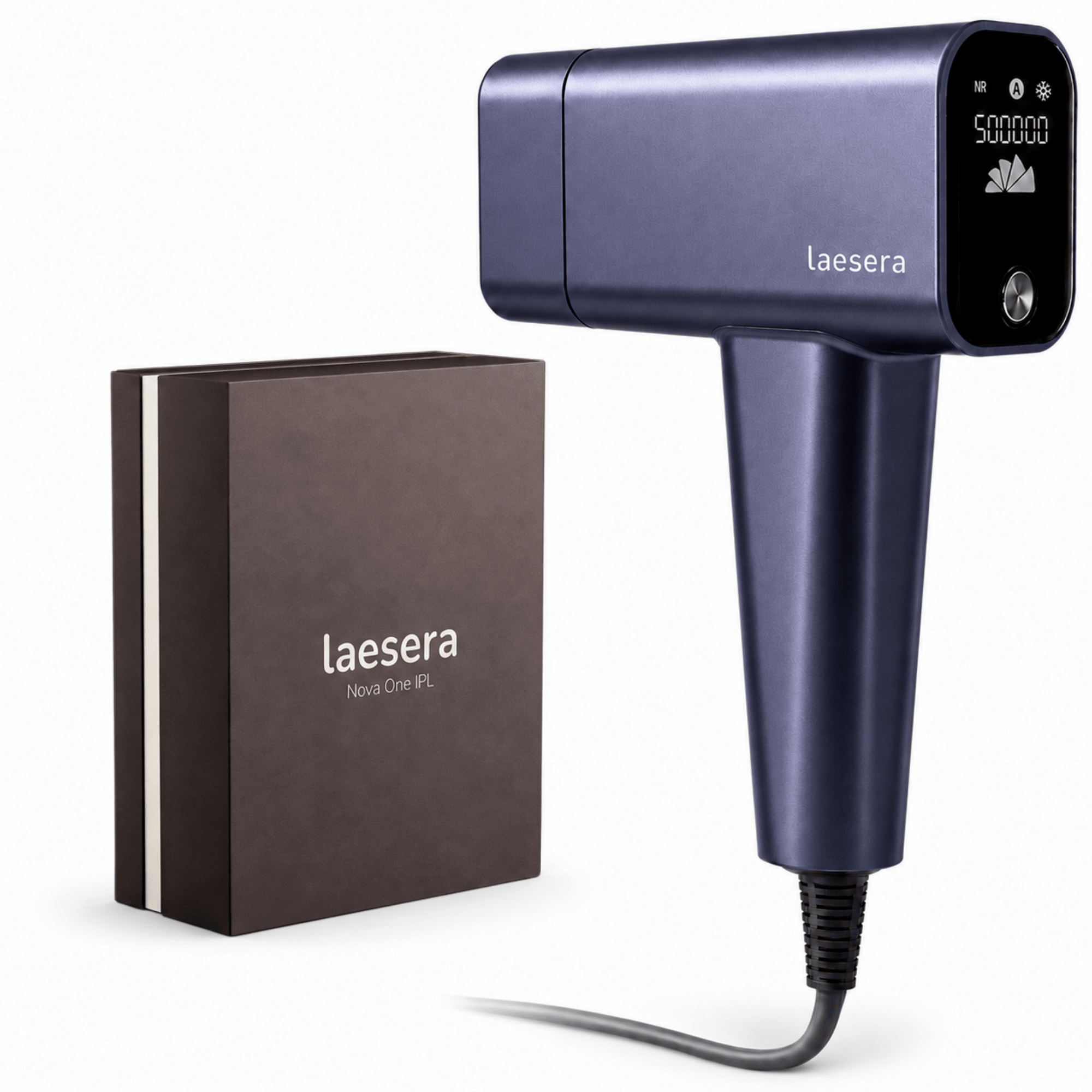
The Nova One IPL uses this proven technology, combined with modern innovations for maximum safety and comfort. A built-in skin sensor automatically recognises the skin's tone and adjusts the energy level of the light flash accordingly. This prevents too much energy being emitted on skin that's too dark, making the treatment safe for different skin types.
During use, an advanced cooling function actively cools the skin after every light pulse. This reduces the heat sensation and prevents irritation, so the treatment is virtually painless, even at higher energy levels.
The Nova One IPL works with a flash interval of 0.5 to 2 seconds, ensuring a smooth and fast treatment. The generous 3.9 cm² light window covers a large surface per flash, ideal for larger areas such as legs or arms, while precision heads are suitable for smaller areas such as underarms or bikini line.
Thanks to the combination of smart sensor technology, efficient flash speed and active cooling, the Nova One IPL offers a safe, comfortable and durable solution for long-lasting hair reduction at home.
Safety & regulations

When using IPL technology, safety always comes first. Modern IPL devices, such as Laesera's, are equipped with several sensors and protection mechanisms to guarantee a safe treatment for home use.
An important role is played by the automatic mode with skin sensor function, which automatically recognises the skin's tone and adjusts the energy level accordingly. This prevents too much light energy being emitted on skin that's too dark. IPL devices also have light filters that only let through specific wavelengths (for example 510–1200 nm). This means only the desired light spectrum that's effective against hair follicles is used, while harmful radiation is blocked.
The flash button usually only works when the device makes full contact with the skin, an extra safeguard that prevents unintended light pulses. Together with automatic temperature control and ice cooling, this ensures a safe, skin-friendly experience.
Certifications and standards
In terms of regulations, quality IPL devices comply with international safety standards such as:
- CE marking: indicates that the device complies with European directives for electrical safety (LVD), electromagnetic compatibility (EMC) and user protection.
- RoHS certification: guarantees that the product is free of harmful substances such as lead or mercury.
- FDA 510(k) clearance: confirms that the device is safe for cosmetic use according to the standards of the US Food and Drug Administration.
Thanks to these safety mechanisms and certifications, IPL devices are suitable for responsible home use, provided they're used according to the manual and the skin is properly cleaned and shaved beforehand.
Treatment areas of the Nova One IPL
IPL can be applied to various body areas, matched to the sensitivity, size and visibility of the area.
-
 Legs
Legs
-
 Bikini area
-
 Chest& stomach
-
 Back
Back
-
 Arms
Arms
-
 Underarms
-
 Face(below cheekbones)
IPL for men
Treating back, chest, shoulders and neck. Read how IPL works for men, which areas are suitable and what to watch out for around the beard line.
Start with clinically proven IPL hair removal
More than 80% less hair growth within 7 weeks, comfortable thanks to ice cooling during every flash.
All about Nova One IPL
What exactly is IPL hair removal and how does it work?
IPL (Intense Pulsed Light) uses flashes of light to heat the hair follicle, reducing hair growth for a long time. Read more about exactly how IPL works.
Is IPL hair removal safe for home use?
Yes, provided the device is certified (CE, RoHS, FDA) and used according to the manual. IPL is virtually painless and skin-friendly when used correctly.
Which body parts can I use IPL on?
IPL is suitable for legs, arms, underarms, bikini line, face (upper lip) and other areas with unwanted hair growth. Use on facial hair (beard/moustache) is usually not recommended. For treating smaller areas we also offer a precision head.
Does IPL hair removal hurt?
IPL is usually not experienced as painful. Most people feel a brief heat sensation or slight tingle. Thanks to cooling the treatment stays comfortable and easy to tolerate. Want to know exactly what to expect? Read our detailed blog about IPL and pain.
How often do I need to use IPL for visible results?
On average 2–3 times a week in the first 5–6 weeks, then maintenance every few months for lasting results. See the full treatment schedule per phase.
What's the difference between IPL and laser hair removal?
Laser works with a single targeted wavelength, precise, but only in a salon and with a price tag of €500 to €2,000+ per course. IPL uses a broader light spectrum, is gentler on the skin and was specifically developed for safe home use at a one-off purchase price. If you want to see all hair removal methods side by side, from shaving to laser, the overview of hair removal methods gives a complete picture.
Which skin types and hair colours is IPL suitable for?
IPL works best on skin types I–IV with dark hair, from dark blond to black. With skin type V it's possible to a limited extent and with extra caution; skin type VI (very dark) and red, white or grey hair are not suitable. Do the skin type test to see whether IPL is suitable for you.
Something else?Send us a message →
The information on this page is for educational purposes only. Always consult your device's manual and use it according to the safety instructions. If in doubt about skin problems, pregnancy or medication use, consult a doctor or dermatologist before using IPL. Laesera accepts no liability for incorrect use of the equipment.