
- Home
- IPL skin type test
Is IPL suitable for your skin type?
IPL (Intense Pulsed Light) is an effective method for long-lasting hair reduction, but not every skin type responds to it the same way. The Fitzpatrick scale helps determine which skin types are suitable for IPL treatments.
The Fitzpatrick skin type scale
The Fitzpatrick scale classifies skin types by their reaction to UV light. Determine your skin type below to see whether IPL hair removal is suitable for you.
- Type I Always burns, hardly tans Very suitable
- Type II Burns easily, tans lightly to hardly Very suitable
- Type III Burns moderately to rarely, tans slowly Suitable
- Type IV Rarely burns, tans easily Suitable
- Type V Rarely burns, dark pigment Limited suitability
- Type VI Never burns, very dark pigment Not suitable
Kortom: IPL works best with high contrast between skin tone and hair colour. Dark hair on light skin gives the best results.
Does IPL work for you?
Choose your skin tone and hair colour and find out straight away whether IPL suits your situation. No quiz, no email address.
Jouw huidtint
Fitzpatrick-schaal: I brandt altijd en kleurt nooit, VI brandt nooit en is altijd donker. Kies de tint die het dichtst bij je natuurlijke kleur ligt, niet bij je zomerkleur.
Haarkleur op de zone
IPL werkt op het pigment in het haar. Donker haar neemt het licht goed op, blond, rood, grijs en wit haar niet of nauwelijks. Het gaat om het haar op de zone die je wilt behandelen, niet om je hoofdhaar.
Uitslag
Selecteer je type
Kies je huidtint en haarkleur hierboven en kom er direct achter of IPL geschikt is voor jouw situatie.
All about IPL and how it works
Which skin type isn't suitable for IPL?
Skin type V (dark) has limited suitability for IPL: only on the lowest levels (1–2), with a patch test beforehand and a gradual build-up, which means it takes longer. Skin type VI (very dark) isn't suitable; the skin then absorbs too much light energy, with too high a risk of burns and pigment changes. For skin type VI, professional laser hair removal is a safer alternative.
Does IPL work on blond, red, grey or white hair?
Red, grey and white hair contain too little melanin (pigment) for effective IPL treatment. The light needs melanin to reach and deactivate the hair root. Blond hair contains limited melanin; IPL can work, but results are slower and less complete than with dark hair. IPL works most effectively on light brown to black hair. Read more about IPL on blond, red and grey hair.
What is the Fitzpatrick scale?
The Fitzpatrick scale is a dermatological classification that divides skin types from I (very light) to VI (very dark), based on natural skin colour and reaction to UV light. The scale was developed in 1975 by dermatologist Thomas Fitzpatrick and is used worldwide to determine which skin and light treatments are safe per skin type, including IPL.
How do I determine my skin type for IPL?
Your skin type is determined by two factors: your natural skin colour and how your skin reacts to sun exposure. If you always burn and never tan, you probably have skin type I or II. If you tan easily without burning, you're closer to type III or IV. Use the check on this page for a personal assessment.
Is IPL safe for dark skin?
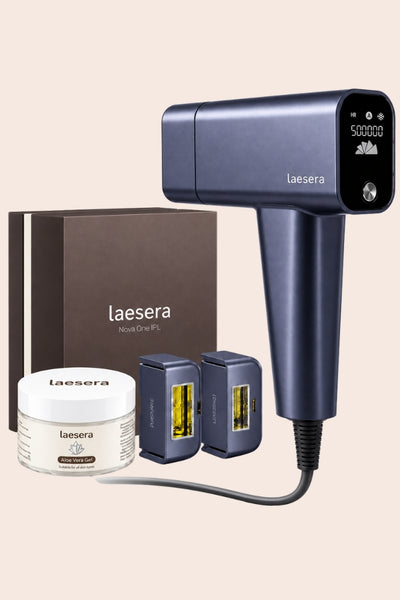
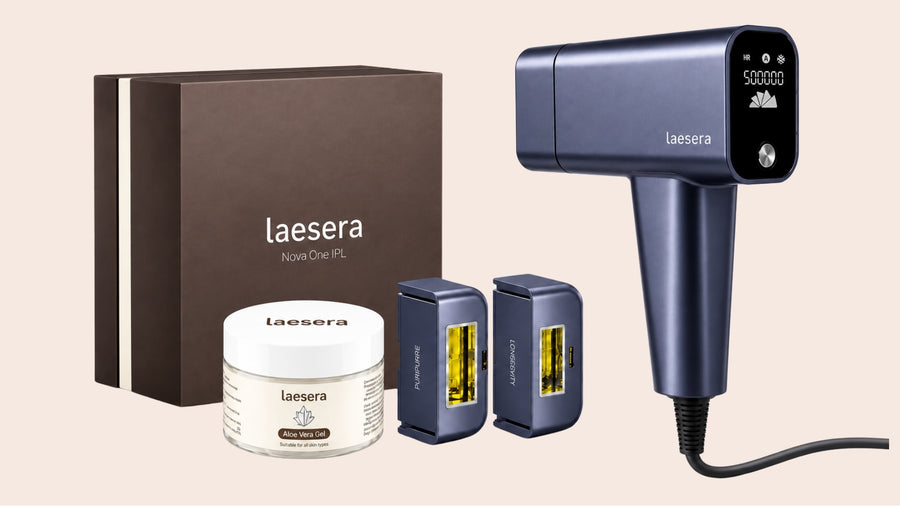
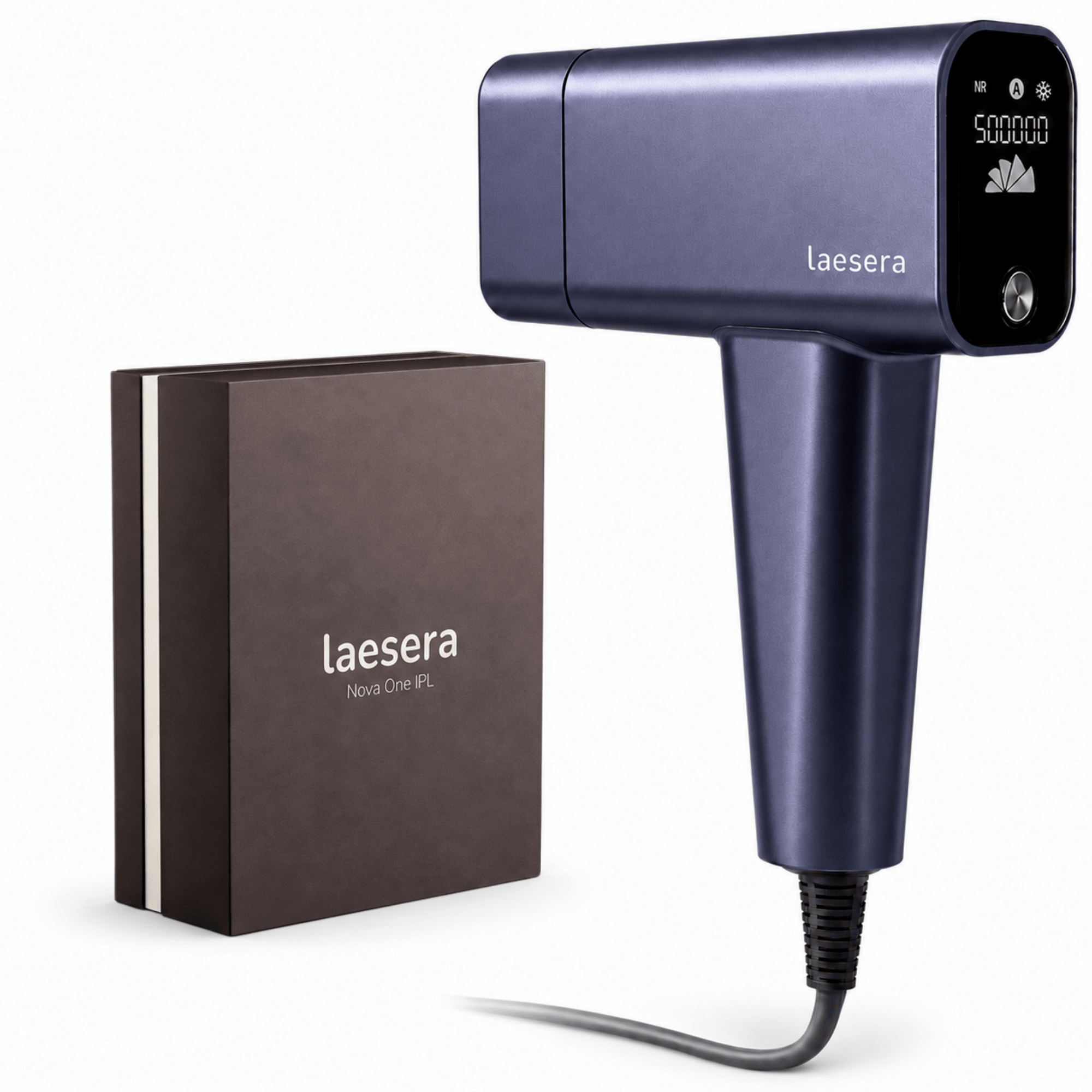
IPL is suitable for skin types I to IV (very light to medium-dark), provided you treat at the right energy level. The darker the skin, the more important a low starting intensity: with skin type IV you start on level 1–2 and build up gradually. The Nova One IPL has a built-in skin sensor that recognises your skin tone and automatically limits the maximum intensity, so you treat safely. Skin type V requires extra caution, only on the lowest levels and with a patch test beforehand, which makes the treatment period longer. For skin type VI, IPL isn't suitable because of the risk of skin damage.
Something else?Send us a message →