


How does IPL work?
IPL (Intense Pulsed Light) is a hair removal technique in which short flashes of light of 510–1200 nm are converted into heat by the pigment in the hair root. That heat slows growth: after each session the hair grows back finer and more slowly, and after 8–12 weeks visibly less grows. IPL gives long-lasting hair reduction, not permanent hair removal.
What happens during an IPL flash?
Your skin lets the light through; the pigment in the hair catches it and converts it into heat, exactly where the hair grows.
IThe flash
A controlled flash of light of 510–1200 nm passes through the top layer of skin. Your skin itself is skipped: the light looks for pigment.
IIHeat at the root
The melanin in the hair root absorbs the light and briefly heats up. That heat interrupts the hair's growth cycle.
IIIFiner and finer, less and less
After each session the hair grows back finer and more slowly. In the clinical test more than 80% of the hair was gone after 7 weeks; after 12 weeks you switch to maintenance.

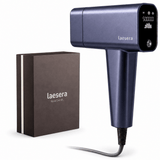
How does the Nova One IPL make it safe and comfortable?
The same technology as in the salon, designed to do yourself at home.
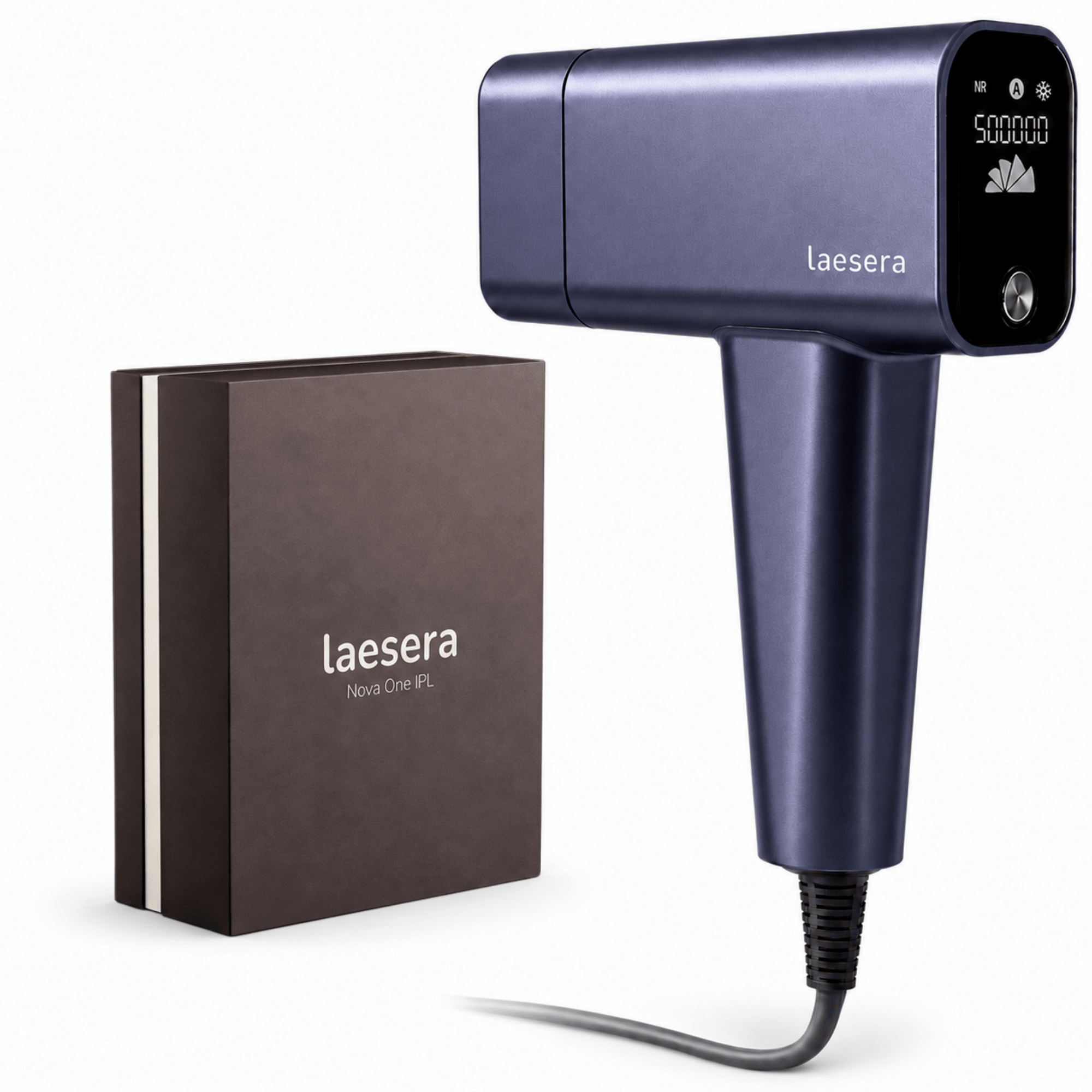
- Skin sensorMeasures your skin tone before every flash and adjusts the intensity. Suitable for skin types I–V; with type VI the device won't flash.
- Ice coolingThe window actively cools to ±15 °C while flashing (to 3 °C at rest), so the heat stays at the root and not on your skin. Less discomfort, even on sensitive areas.
- 5 levels, monitored by the sensorYou choose the level: start low and build up per session. If a level is too high for your skin tone, the skin sensor limits it automatically.
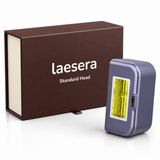
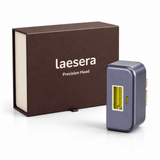
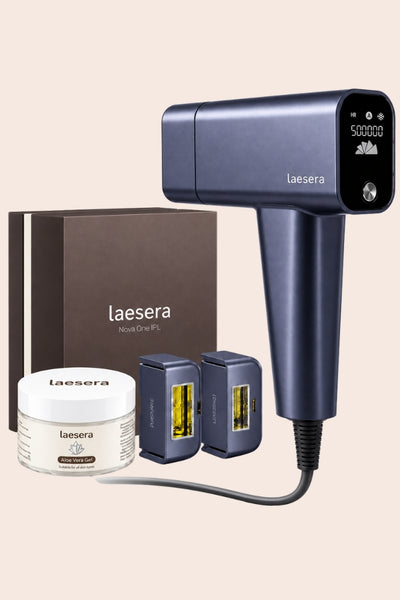
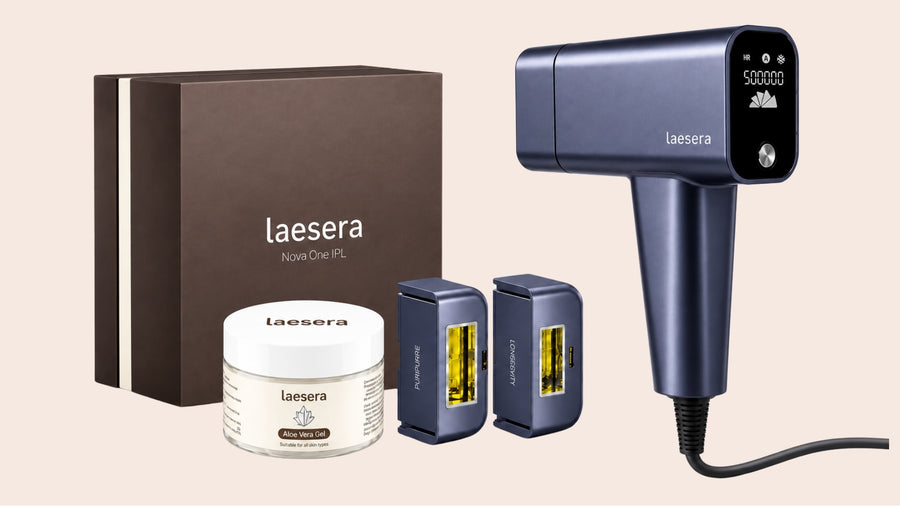
- Two headsThe standard head (3.9 cm²) is included, for legs, arms, back and stomach. The precision head (2.5 cm²) for face, bikini line and underarms is available separately or in the Complete Set.
- Replaceable lampEach lamp lasts 500,000 flashes, years of use on your whole body. When it's used up you swap only the lamp and have another 500,000 new flashes. No new device needed.
Why do you need several IPL sessions?
Only 20 to 30% of your hairs are actively growing at any given moment. Only those hairs are full of pigment and respond to the flash. The rest get their turn in a later session.
That's why you build it up: with every session you catch a new group of hairs.
How do you use the Nova One IPL?
The rhythm builds up over 6 weeks and then becomes more relaxed: 2× a week in weeks 1 to 4, 1× a week until week 8, 1× every 2 weeks until week 12 and after that 1× a month. The full schedule per area is below. This applies to every session:
Before every session
- Shave the area 12–24 hours beforehand. Don't wax or epilate: that removes the root that needs to catch the light.
- Clean and dry: no cream, oil or deodorant.
- No sun or sunbed in the two weeks before.
- Skip: tattoos, dark moles, nipples and mucous membranes.
- New area? Do a test flash on a small patch of skin first and wait 24 hours.
During the session
- Flat on the skin: the window must make full contact, otherwise the device won't flash.
- Don't overlap: one flash per spot per session. Tap on small areas, glide on large ones.
- Feels too warm? Go down a level. Warm is fine, pain isn't.
How does IPL work per area?
Choose an area for the full schedule: from build-up to maintenance, with setting and head.
Underarms
Arm up, skin taut. Work in taps, one flash per spot. Precision head for the hollow, standard head for the edge. No deodorant beforehand.
The skin sensor measures your skin with every flash and automatically limits the setting if it's too high for your skin tone. The guideline above helps you build up safely.
- Weeks 1 to 42× a weekBuild-up: one full treatment per session, setting up step by step
- Weeks 4 to 81× per weekReduction: the hair grows back finer and more slowly; one session a week is enough
- Weeks 8 to 121× every 2 weeksTapering: you only treat where hair returns
- After that1× a monthMaintenance: only where hair returns; over time, by feel
Legs
Glide mode in straight passes from ankle to knee, then the thigh. Knees and ankles separately in taps. Lower legs often respond faster than thighs.
The skin sensor measures your skin with every flash and automatically limits the setting if it's too high for your skin tone. The guideline above helps you build up safely.
- Weeks 1 to 42× a weekBuild-up: one full treatment per session, setting up step by step
- Weeks 4 to 81× per weekReduction: the hair grows back finer and more slowly; one session a week is enough
- Weeks 8 to 121× every 2 weeksTapering: you only treat where hair returns
- After that1× a monthMaintenance: only where hair returns; over time, by feel
Bikini line
Only the bikini line and groin; not on mucous membranes. Start on level 1, precision head for the edges. Build up more slowly here.
The skin sensor measures your skin with every flash and automatically limits the setting if it's too high for your skin tone. The guideline above helps you build up safely.
- Weeks 1 to 42× a weekBuild-up: one full treatment per session, setting up step by step
- Weeks 4 to 81× per weekReduction: the hair grows back finer and more slowly; one session a week is enough
- Weeks 8 to 121× every 2 weeksTapering: you only treat where hair returns
- After that1× a monthMaintenance: only where hair returns; over time, by feel
Arms
Glide mode from wrist to elbow. Arm hair is often finer and lighter: expect a more gradual result and complete the full 12 weeks.
The skin sensor measures your skin with every flash and automatically limits the setting if it's too high for your skin tone. The guideline above helps you build up safely.
- Weeks 1 to 42× a weekBuild-up: one full treatment per session, setting up step by step
- Weeks 4 to 81× per weekReduction: the hair grows back finer and more slowly; one session a week is enough
- Weeks 8 to 121× every 2 weeksTapering: you only treat where hair returns
- After that1× a monthMaintenance: only where hair returns; over time, by feel
Face
Only below the cheekbones: upper lip, chin and jawline. Never around the eyes or on the eyebrows. Lips tucked in for the upper lip, skin taut at the chin.
The skin sensor measures your skin with every flash and automatically limits the setting if it's too high for your skin tone. The guideline above helps you build up safely.
- Weeks 1 to 42× a weekBuild-up: one full treatment per session, setting up step by step
- Weeks 4 to 81× per weekReduction: the hair grows back finer and more slowly; one session a week is enough
- Weeks 8 to 121× every 2 weeksTapering: you only treat where hair returns
- After that1× a monthMaintenance: only where hair returns; over time, by feel
Back
Glide mode in passes from top to bottom. Ask someone to help; you can't see for yourself whether you've skipped a pass. Shoulder blades and spine in taps.
The skin sensor measures your skin with every flash and automatically limits the setting if it's too high for your skin tone. The guideline above helps you build up safely.
- Weeks 1 to 42× a weekBuild-up: one full treatment per session, setting up step by step
- Weeks 4 to 81× per weekReduction: the hair grows back finer and more slowly; one session a week is enough
- Weeks 8 to 121× every 2 weeksTapering: you only treat where hair returns
- After that1× a monthMaintenance: only where hair returns; over time, by feel
Stomach
Work in passes around the navel and the line below it; skip the navel itself. Coarser hair may need a higher setting; build up gradually.
The skin sensor measures your skin with every flash and automatically limits the setting if it's too high for your skin tone. The guideline above helps you build up safely.
- Weeks 1 to 42× a weekBuild-up: one full treatment per session, setting up step by step
- Weeks 4 to 81× per weekReduction: the hair grows back finer and more slowly; one session a week is enough
- Weeks 8 to 121× every 2 weeksTapering: you only treat where hair returns
- After that1× a monthMaintenance: only where hair returns; over time, by feel
Chest
Glide mode in passes. Keep well away from the nipples and areola: no flashing there. Between the breasts in taps.
The skin sensor measures your skin with every flash and automatically limits the setting if it's too high for your skin tone. The guideline above helps you build up safely.
- Weeks 1 to 42× a weekBuild-up: one full treatment per session, setting up step by step
- Weeks 4 to 81× per weekReduction: the hair grows back finer and more slowly; one session a week is enough
- Weeks 8 to 121× every 2 weeksTapering: you only treat where hair returns
- After that1× a monthMaintenance: only where hair returns; over time, by feel
What do you do after an IPL treatment?
For the first two days the skin is more sensitive to heat and light.
Straight after the sessionFirst hours
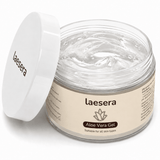
- ✓Cool the skin with a cool pack or aloe vera gel
- ✓Moisturise with a soothing, fragrance-free cream
- ✓Slight redness or warmth is normal and fades within a few hours
- ✓Wear loose, soft clothing over the treated area
AvoidFirst 24–48 hours
- ×Direct sunlight and sunbeds; afterwards SPF 30+, preferably 50+
- ×Sauna, steam room, hot showers and intense exercise
- ×Scrubs, peels, retinol or acids
- ×Deodorant with alcohol on treated underarms
See a doctorIf in doubt
- !Redness or swelling lasting longer than 72 hours
- !Blisters or burns
- !Pigment changes that don't disappear on their own
- !In doubt? Email support@laesera.com, we reply within 1 business day
Does IPL work for you?
Choose your skin tone and hair colour and find out straight away whether IPL suits your situation. No quiz, no email address.
Your skin tone
Fitzpatrick scale: type I always burns and never tans, type VI never burns and is always dark. Choose the tone closest to your natural colour, not your summer tan.
Hair colour on the area
IPL works on the pigment in the hair. Dark hair absorbs the light well; blond, red, grey and white hair barely absorb it, if at all. It's about the hair on the area you want to treat, not the hair on your head.
Result
Select your type
Choose your skin tone and hair colour above and find out straight away whether IPL suits your situation.
At home, for real
No studio, just the bathroom or living room.
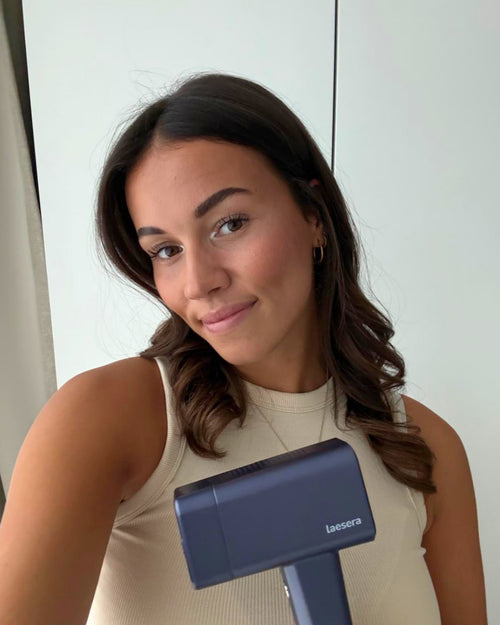
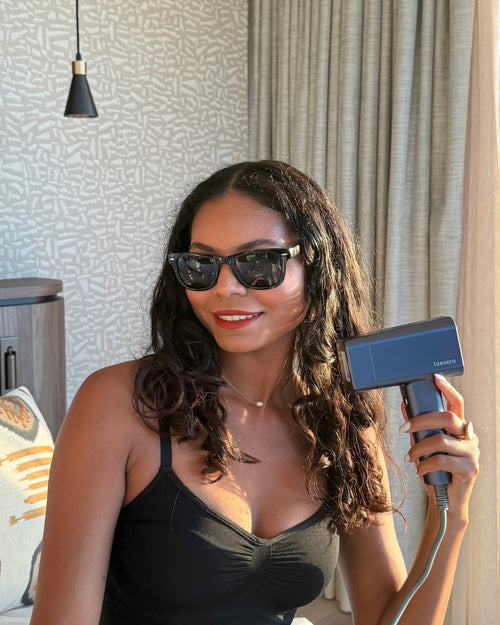
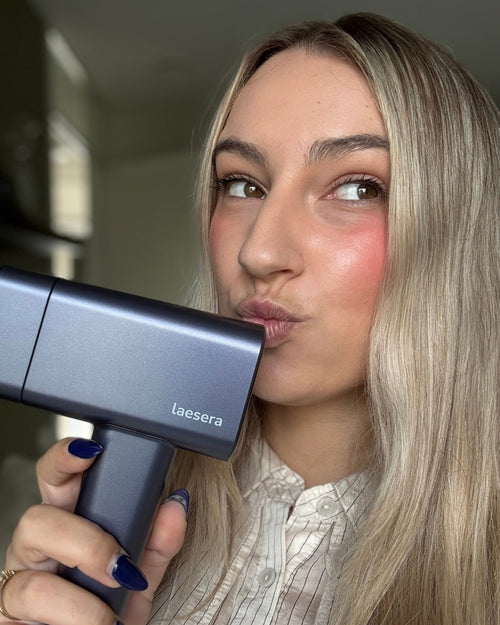
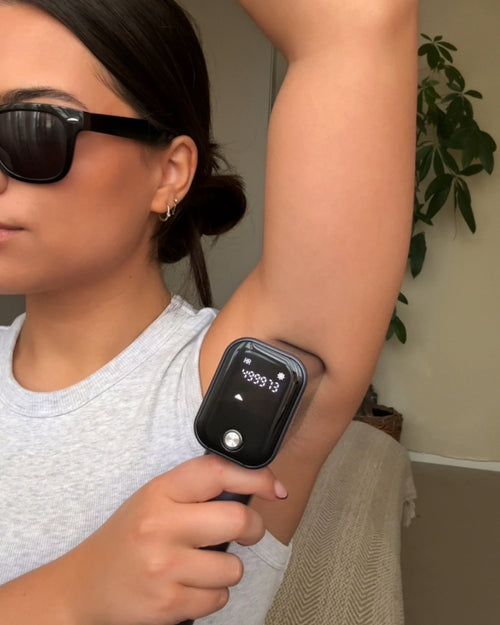

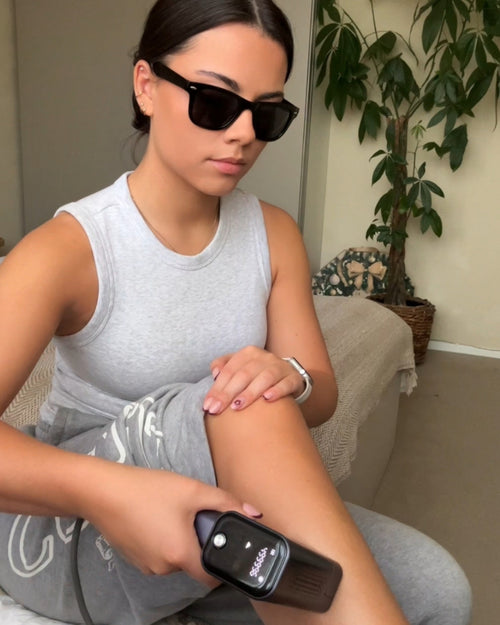

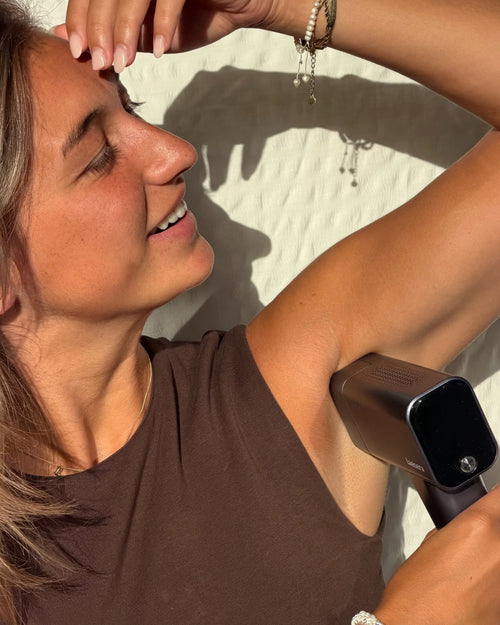
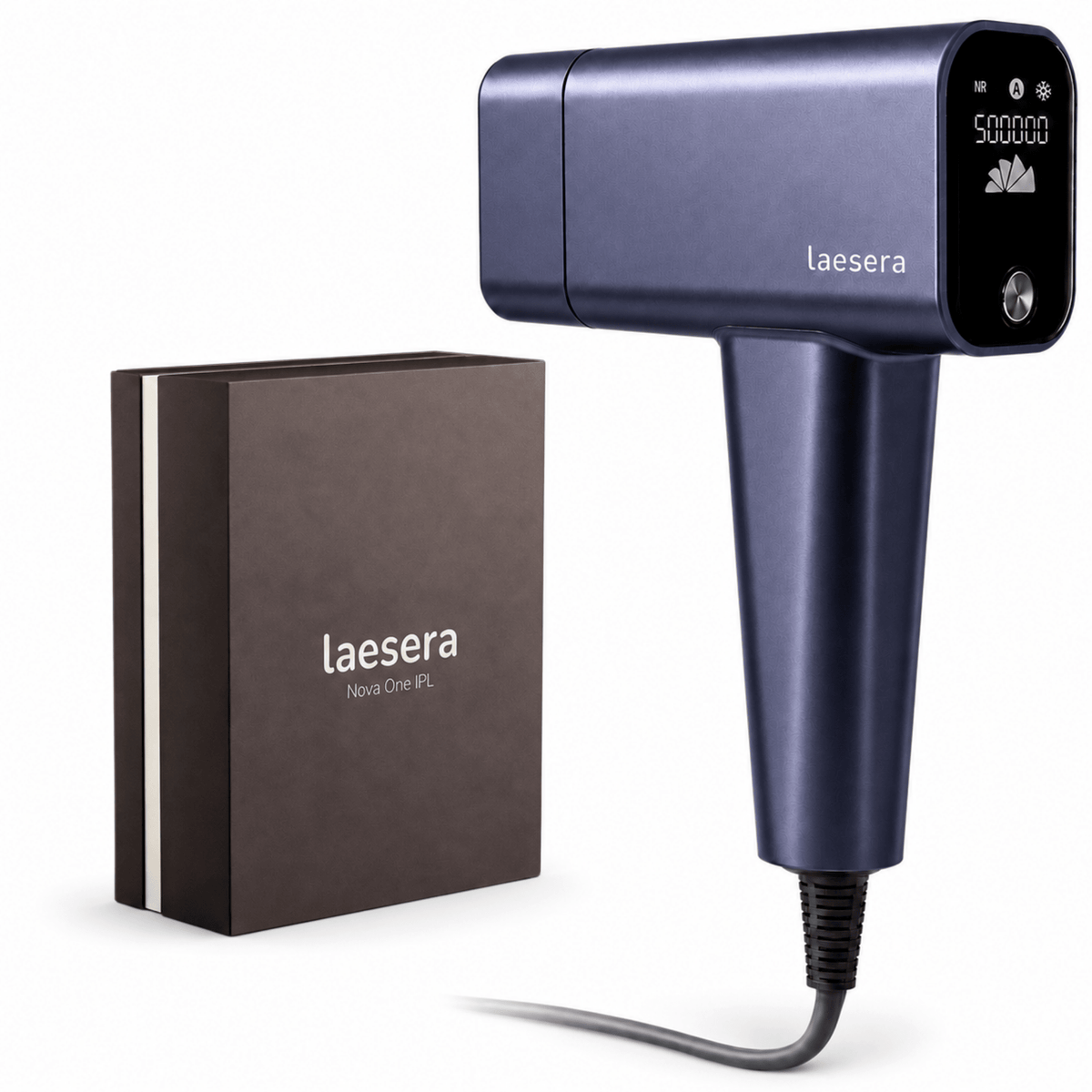
Laesera Nova One IPL
- Ice cooling around 15 °C while flashing, 3 °C at rest
- Skin sensor that limits the setting for your skin tone
- More than 80% less hair within 7 weeks in the clinical test
- Replaceable lamp, 500,000 flashes per lamp
€219,95€199,95Bestseller
Frequently asked questions about IPL
Is IPL safe to use at home?
Yes. The Nova One IPL has a skin sensor that limits the intensity, a contact sensor that only flashes with full skin contact, and a UV filter. The device is CE-marked and complies with the applicable European safety standards.
How long until I see results?
Most people notice after 3 to 4 weeks that the hair grows back finer and more slowly. In the clinical test the hair had reduced by more than 80% within a maximum of seven weeks. Results vary per person and depend on skin tone, hair colour and sticking to the schedule.
Does it work on all skin types?
IPL works best on Fitzpatrick skin types I to IV with dark to medium-dark hair. With skin type V the skin sensor limits the intensity to level 1 or 2. With skin type VI the sensor blocks the flash; that skin type is not suitable. Not sure? Do the check at the top of this page.
Does an IPL session hurt?
You feel a warm tap, similar to a rubber band. The ice cooling keeps the skin around 15 °C during the flash, which is more comfortable than devices without active cooling. It's not completely painless, and sensitivity varies per person and per area.
What is the difference between IPL and laser?
IPL uses a broad light spectrum (510 to 1200 nm) and a larger window; laser uses a single wavelength and a narrow beam. That makes IPL safe to use at home and faster on large areas, while laser in a clinic is more precise and more powerful. The principle is the same: heat via the pigment in the hair.
Can I use IPL during pregnancy?
There's no evidence of harm, but there's also been no research on pregnant women. That's why we advise pausing during pregnancy and breastfeeding.
Can't find your question?View all questions →