
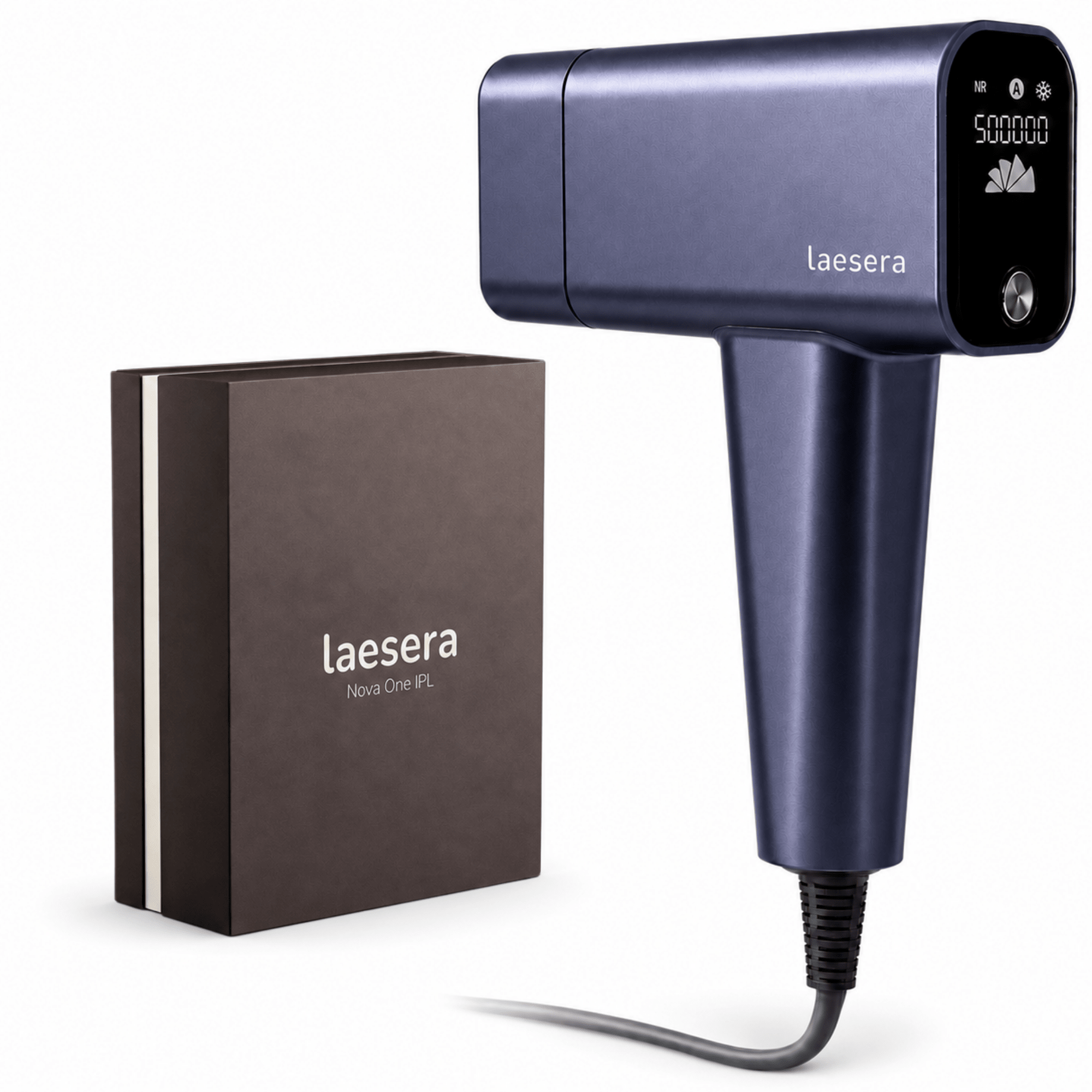

The science behind the Nova One IPL
IPL hair removal is applied physics: light of the right wavelength, in the right dose, just long enough to heat the hair root without affecting the surrounding skin. That principle is called selective photothermolysis. On this page we explain which choices follow from it and how they're built into the Nova One IPL.
Selective photothermolysis
The idea was described in 1983 by Anderson and Parrish: if you choose light that is strongly absorbed by one structure in the skin and barely by the rest, you can heat that structure while the surroundings stay cool. In hair removal, that structure is the melanin in the hair shaft and root. Three conditions determine whether it works.
Melanin absorbs visible red and near-infrared light much more strongly than water and haemoglobin. That makes the range between roughly 600 and 1100 nm the "window" in which hair heats up and skin doesn't.
510–1200 nm, UV is filtered out
The flash must be shorter than the time the follicle needs to shed its heat (the thermal relaxation time, tens of milliseconds). Then the heat stays in the root instead of leaking away into the skin.
Short pulses, shorter than the follicle's relaxation time
The amount of energy per square centimetre (J/cm²) determines whether the root gets hot enough (around 70 °C) to interrupt growth. Too little does nothing; too much stresses the skin. That's why the dose is matched to skin tone.
5 levels, dose limited by the skin sensor
IPL works because hair absorbs more light than skin. Everything about the Nova One IPL (wavelength, pulse duration, dose) is chosen to make that difference as large as possible.
What light does the Nova One IPL use?
Not all light is suitable for hair removal. It has to pass through the skin, be absorbed by the pigment in the hair, and leave the skin itself alone as much as possible. That only works in a narrow part of the spectrum. The figures that matter:
The frame is the light the Nova One IPL emits: 510 to 1200 nm. The shaded ends don't reach your skin. Left of 700 nm the light is visible, right of it invisible infrared; the further right, the deeper it penetrates.
The Nova One IPL uses the full range used in clinics, and nothing outside it.
Dose, skin tone and the sensor
Melanin isn't only in hair, but also in skin. The darker the skin tone, the more light the epidermis itself absorbs and the smaller the margin between "effective" and "too much". A responsible device measures that, instead of leaving it to the user.
With every skin contact the Nova One IPL scans the melanin level and adjusts the intensity to a level that's safe for that skin tone: with skin type V the energy is automatically limited to level 1–2, with type VI the flash is blocked. Not once per session, but per flash, because skin tone differs per area.
- MeasurementPer flash, on melanin
- Skin types I–IVAll 5 levels
- Skin type VLimited to levels 1–2
- Skin type VIFlash blocked
- Target temperature at the root± 70 °C
You choose the level, the sensor guards the limit. A level that's too high for your skin tone isn't possible with the Nova One IPL.
Why cooling isn't a luxury
Selectivity is never perfect: some of the energy always ends up in the epidermis. Contact cooling draws that heat away before and during the flash. That protects the skin and dampens the heat sensation you feel. In clinics it's standard; in home devices it's often left out.
The Nova One IPL has its own cooling system that works independently of the lamp and stays on between flashes, at every level.
During use the plate fluctuates between 13 and 16 °C; without flashing it cools down to 3 °C in about two minutes.
The heat goes to the hair root, the cold to your skin. That's why you feel a tap, not a burn.
Window, lamp and lifespan
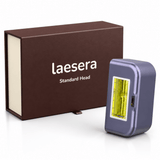
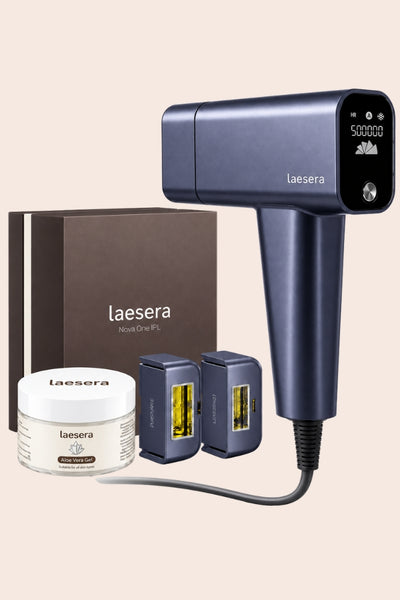
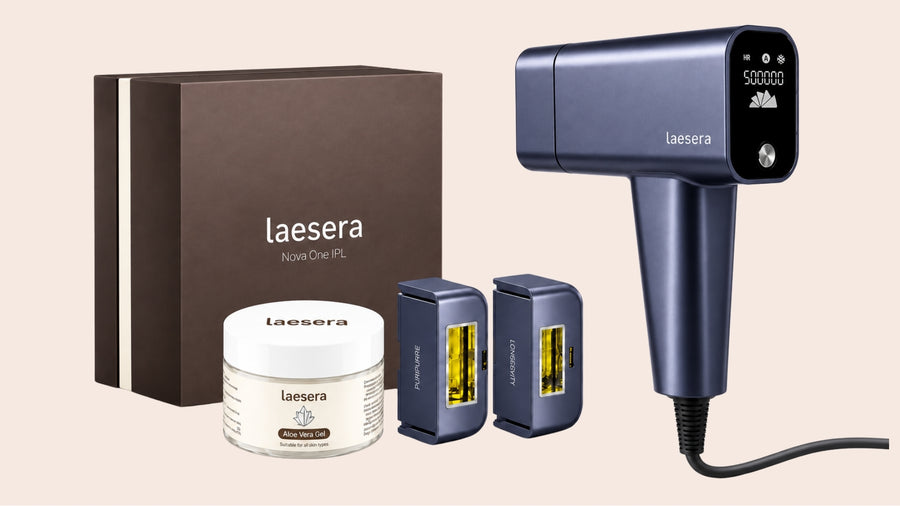
The lamp window determines how much skin one flash covers. Larger is faster on legs and back; smaller is more precise on the upper lip and bikini line, where you follow edges and contours. That's why two heads instead of one compromise.
The lamp itself is a consumable: every flash wears it a fraction. On the Nova One IPL the lamp is replaceable, so the device doesn't have to be thrown away when the lamp is used up.
- Standard window3.9 cm²
- Precision head2.5 cm²
- Flashes per lamp500.000
- LampReplaceable
- OperationTap or glide
A large window for speed, a small window for precision, and a lamp you replace instead of the device.
IPL, laser and electrolysis side by side
Three techniques that all disable the hair root, each with different physics and a different place where they belong.
IPL
- Working principleBroad-spectrum light, heat via melanin
- SelectivityFilter determines the range
- Works on light hairNo
- Area per flash2.5–3.9 cm²
- WhereAt home, your own pace
- ResultLong-lasting reduction, maintenance needed
Laser
- Working principleSingle wavelength, heat via melanin
- SelectivityVery high, single wavelength
- Works on light hairNo
- Area per flashSmall, high energy
- WhereClinic, practitioner
- ResultLong-lasting reduction, maintenance needed
Electrolysis
- Working principleElectric current via a needle per hair
- SelectivityMechanical, per follicle
- Works on light hairYes
- Area per flashOne hair at a time
- WhereClinic, practitioner
- ResultThe only one recognised as permanent
| IPL | Laser | Electrolysis | |
|---|---|---|---|
| Working principle | Broad-spectrum light, heat via melanin | Single wavelength, heat via melanin | Electric current via a needle per hair |
| Selectivity | Filter determines the range | Very high, single wavelength | Mechanical, per follicle |
| Works on light hair | No | No | Yes |
| Area per flash | 2.5–3.9 cm² | Small, high energy | One hair at a time |
| Where | At home, your own pace | Clinic, practitioner | Clinic, practitioner |
| Result | Long-lasting reduction, maintenance needed | Long-lasting reduction, maintenance needed | The only one recognised as permanent |
What the Nova One IPL test shows
The Nova One IPL was clinically tested in a hospital setting in 2023. Twenty participants treated arms, underarms and legs following the build-up schedule; after a maximum of seven weeks hair growth was compared with the baseline.
What we don't claim
An expert also knows where the technology stops. These are the things we deliberately don't say about IPL and the Nova One IPL.
Sources: 1. Anderson RR, Parrish JA. Selective photothermolysis: precise microsurgery by selective absorption of pulsed radiation. Science, 1983. 2. Clinical test Nova One IPL, Shenzhen Spring Sun Hospital, 2023. 3. Nova One IPL user manual.
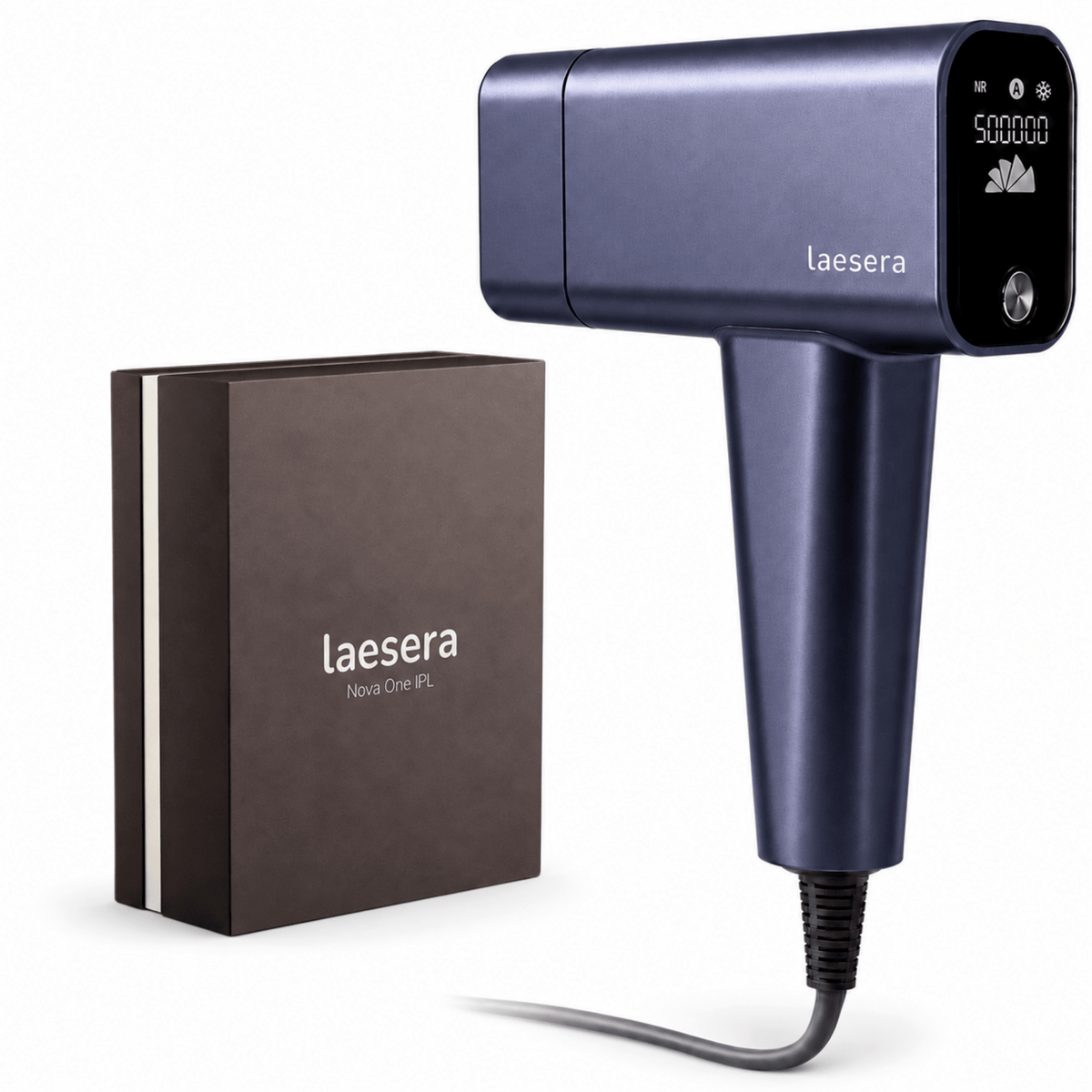
Laesera Nova One IPL
- Ice cooling around 15 °C while flashing, 3 °C at rest
- Skin sensor that limits the setting for your skin tone
- More than 80% less hair within 7 weeks in the clinical test
- Replaceable lamp, 500,000 flashes per lamp
€219,95€169,95Bestseller